


Name the Emotion to Lower its Heat
Why it works
Naming a feeling is not just describing it. It quietly changes the state itself.
The same act of putting experience into words draws on regions involved in language and reasoning, and this shift is associated with a measurable reduction in amygdala reactivity. Nothing dramatic. Enough to matter.
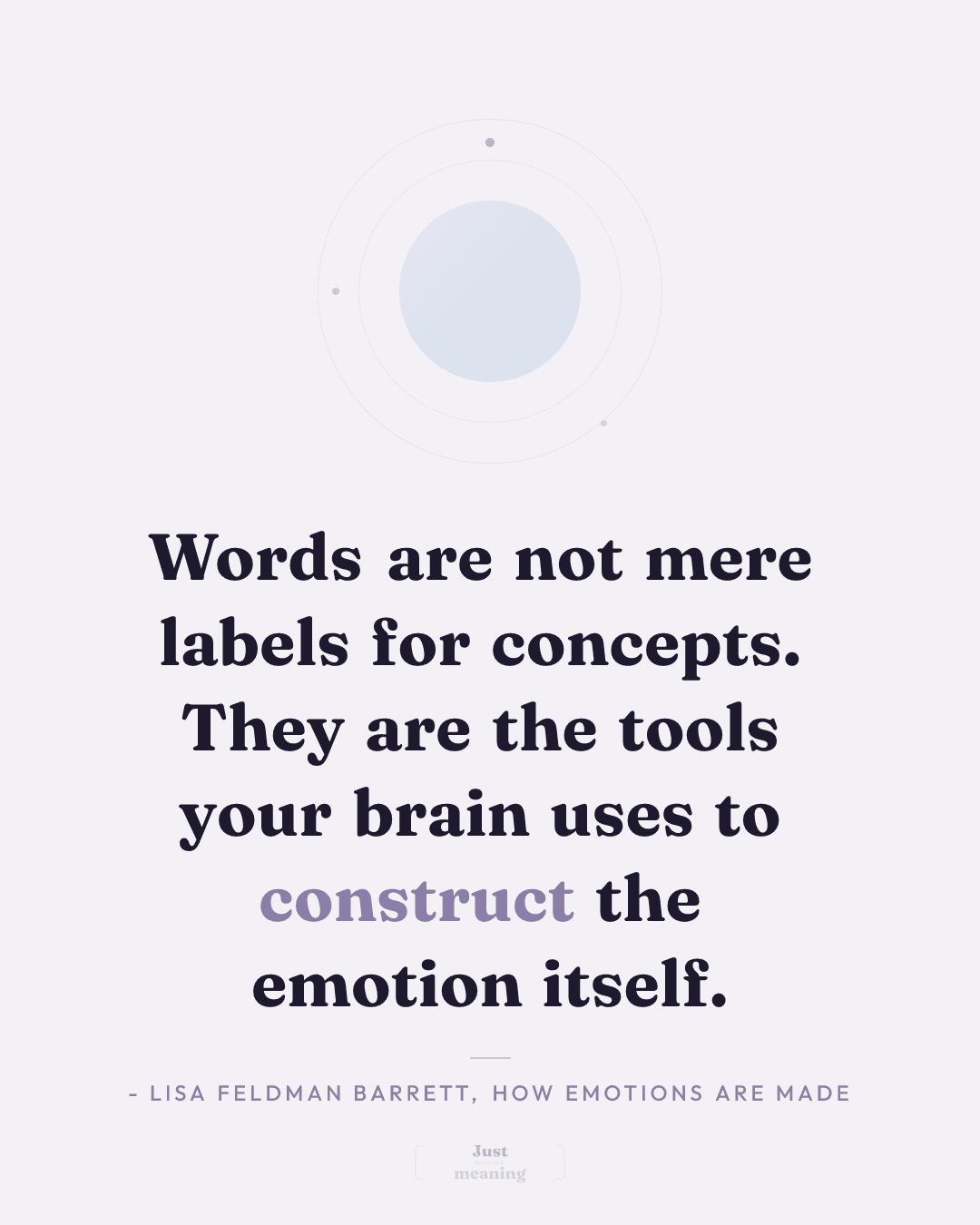
This fits the view that emotions are not fixed biological signals but constructed categories. The word you reach for becomes part of how the experience is assembled, not a caption added after the fact.
Sharper labels, steadier response
The word you reach for shapes the regulation that follows.
"Stressed" collapses many different states into one. "Resentful," "rushed," "embarrassed," and "lonely" each point to a different situation and a different response. Fine-grained labels make it less likely that an unrelated coping habit gets applied to the wrong problem.
People who habitually distinguish frustration from disappointment, or irritation from anger, tend to respond more deliberately under pressure and lean less on avoidance or substances to cope.
In practice
No sitting down, no process, no journal required.
When something feels off, reach past the first word that comes up. If "stressed" arrives, ask whether the closer word is overwhelmed, anxious, or pressured. One extra notch of precision is usually enough to change what happens next.
This is not about suppressing the feeling or reframing it into something positive. It is about seeing it clearly.
Further reading
- •Putting Feelings into Words: Affect Labeling Disrupts Amygdala Activity in Response to Affective Stimuli — Matthew D. Lieberman et al.
- •How Emotions Are Made: The Secret Life of the Brain — Lisa Feldman Barrett
- •Affect Labeling as Implicit Emotion Regulation — Jana B. Torre & Matthew D. Lieberman
- •Emotional Granularity and Emotion Regulation — Todd B. Kashdan, Lisa Feldman Barrett & Patrick E. McKnight