

Small Problems Are Not That Small
Why small things matter
One difficult conversation, one bad day, one conflict. That is a normal part of life and your body handles it without issue. Stress appears, mobilizes, passes. The system returns to baseline.
But when the same stress appears every day, it does not pass. The body does not return to baseline because baseline has been shifted. The nervous system adapts to a state of heightened readiness and starts treating it as the norm. Scientists call this allostatic load. It is the cumulative physiological cost of chronic stress that does not seem dramatic on its own but never lets up.
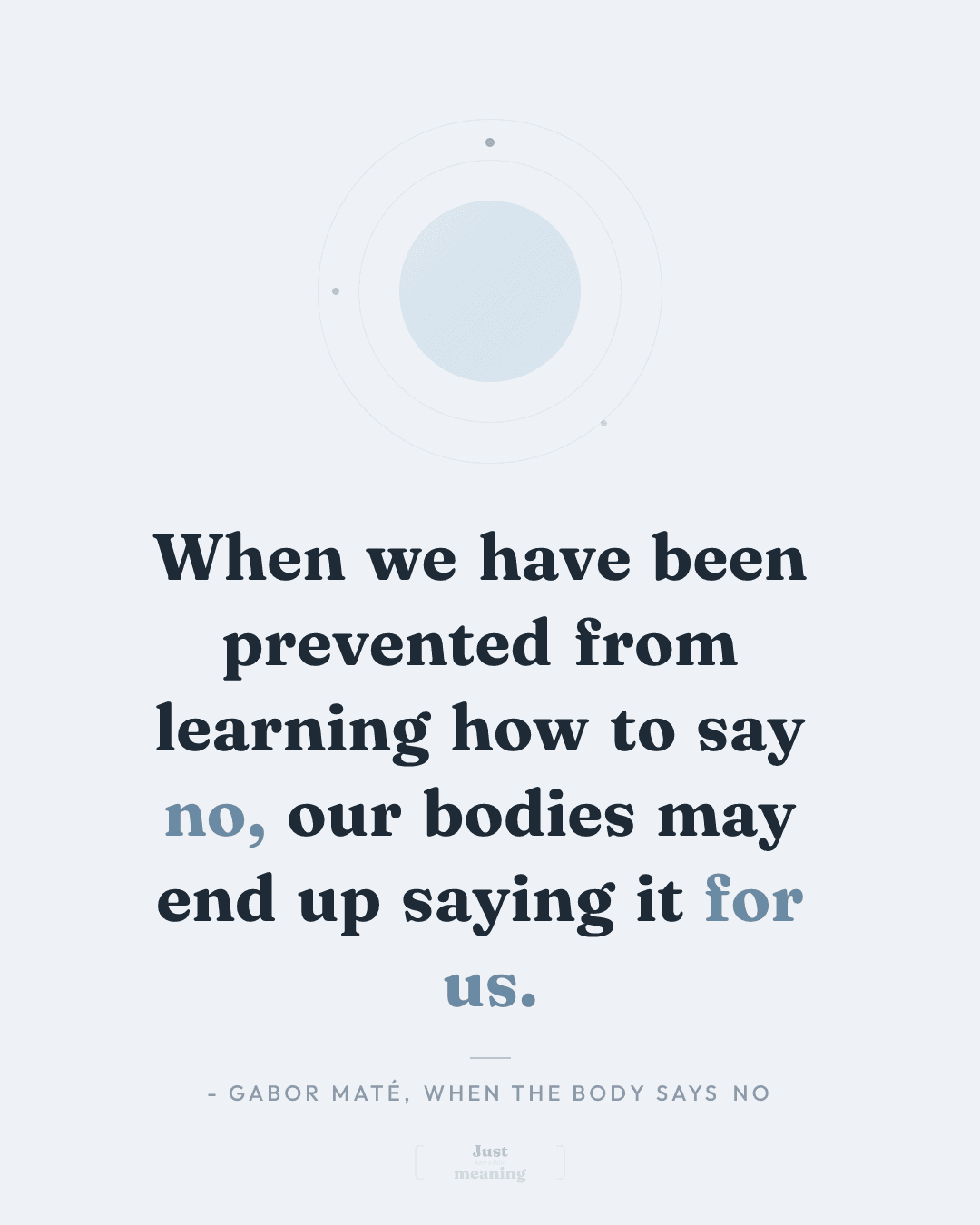
Gabor Maté, a physician and author of "When the Body Says No," describes dozens of cases in which people tolerated situations for years that "were not that bad." A toxic coworker, a relationship where they felt overlooked, a job that felt meaningless. None of these things seemed worth a confrontation. And then the body spoke up. Headaches, insomnia, immune problems, and in some cases conditions that may be linked to chronic stress. Not because one situation was unbearable, but because three hundred "minor" situations added up.
The cost of pretending
Jordan Peterson puts it directly: if you do not tell the truth, at least do not lie. That includes what you tell yourself.
When you keep telling yourself "it's nothing" about something that hurts or irritates you, you are doing two things at once. You are suppressing an emotion that carries information. And you are building a habit of ignoring your own signals. Over time you lose contact with what is actually bothering you. Not because the problems disappeared. Because you trained yourself not to notice them.
This has concrete consequences. People who chronically suppress dissatisfaction recognize their own needs less clearly, make decisions that conflict with what they actually want more often, and reach the point of burnout seemingly "out of nowhere." Not out of nowhere. Out of hundreds of small things, each of which individually seemed too minor to address.
What to do about it
You do not have to change everything at once. But you have to start with honesty toward yourself.
Ask yourself: what am I tolerating while pretending it does not bother me? Maybe it is the way someone speaks to you. Maybe it is an aspect of your work that makes you feel bad. Maybe it is a habit you know is harming you but you are downplaying.
Simply naming it changes the situation. Not because a solution will magically appear, but because as long as you do not name something, you have nothing to work with. You cannot fix a problem that officially does not exist.
The next step is deciding what to do about it. Sometimes it is a conversation. Sometimes a boundary. Sometimes a change you need to work up to. But it always starts from the same moment: admitting that something is wrong.
Further reading
- •When the Body Says No — Gabor Maté
- •12 Rules for Life — Jordan B. Peterson
- •Burnout — Emily Nagoski, Amelia Nagoski