


Use Paradoxical Intention to Beat Fear
Who invented this - and why it matters
Viktor Frankl was an Austrian psychiatrist who developed logotherapy, a form of psychotherapy centered on the human search for meaning. He developed paradoxical intention over the course of his career, formalizing the technique in the 1940s and 1950s. But the ideas behind it were tested under the most extreme conditions imaginable: Frankl survived the Holocaust, including Auschwitz and a subcamp of Dachau. The ideas he developed before the war held up under circumstances that broke nearly everything else.
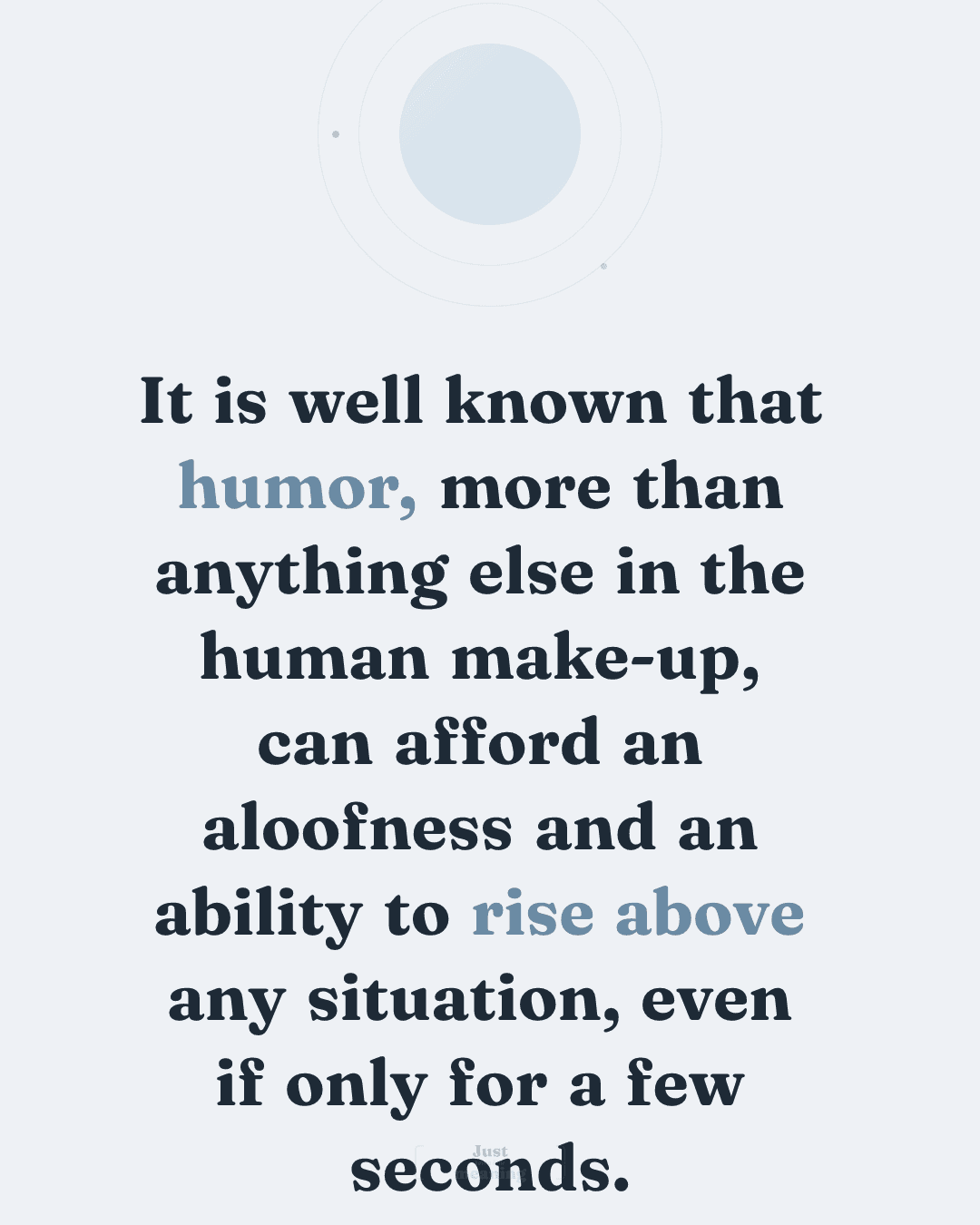
Paradoxical intention is one of the most concrete tools to emerge from logotherapy. Unlike techniques that ask you to challenge your thoughts or reframe your beliefs, this one asks you to do something much stranger. To want the very thing you are afraid of. Frankl described it as using the human capacity for humor and self-detachment to step outside the automatic fear response and observe it from a distance (Frankl, 1960).
The technique is not about tricking yourself. It is about disrupting a specific psychological loop that anxiety depends on.
The self-fulfilling loop of anticipatory anxiety
Anticipatory anxiety is what happens when the fear of an experience becomes more distressing than the experience itself. You are not afraid of trembling. You are afraid of being afraid of trembling. You are not afraid of lying awake. You are afraid of lying awake worrying about lying awake.
This creates a feedback loop: the anxiety about the symptom produces the very tension that generates the symptom. Research in sleep medicine illustrates this clearly. Studies on psychophysiological insomnia show that arousal and sleep-related worry, not the bedroom or the mattress, are the primary drivers of sleeplessness in people without organic sleep disorders (Harvey, 2002). The harder you try to force sleep, the more alert your nervous system becomes.
The same pattern appears in performance anxiety. Worrying about shaking hands increases muscle tension. Worrying about blushing increases blood flow to the face. The attempt to suppress the symptom becomes the mechanism that sustains it. This is sometimes called the anxiety-effort cycle: effort directed at controlling anxiety feeds back into the anxiety itself.
Paradoxical intention interrupts this cycle at a structural level, not by managing the symptom but by changing your relationship to it entirely.
How it works: humor, distance, and the nervous system
When you genuinely try to produce a feared symptom, really try, with some theatrical commitment, several things happen at once.
First, the instruction is paradoxical in a way the nervous system cannot easily execute. Anxiety is an involuntary response. You cannot will yourself into a genuine panic on demand in the same way you cannot will yourself into a genuine laugh. Trying to manufacture the symptom voluntarily reveals that the symptom was never fully in your control to begin with, which reduces the urgency to control it.
Second, the act of trying introduces a cognitive shift that Frankl called self-detachment. You are no longer inside the fear looking out. You are outside it, watching it, even playing with it. This mirrors what more recent research describes as psychological distancing or defusion: the capacity to observe your mental states without being fused with them (Hayes et al., 2006). When you can see the fear as an object rather than a condition you inhabit, it loses some of its automatic force.
Third, humor matters more than it might seem. Frankl was specific about this: the instruction to the patient should carry a light, almost absurd quality. Telling yourself you will shake so violently that the whole room notices is funnier than telling yourself you will tremble slightly. The humor is not decoration. It signals safety to the nervous system. Humor activates circuits that reduce the intensity of the threat response. A system that is engaging humor is, at the neurological level, less likely to be in full fight-or-flight mode.
Clinical applications and what the evidence shows
Paradoxical intention has been studied most consistently in the context of sleep difficulties and performance anxiety. A review by Ascher and Turner (1979) found the technique effective for sleep-onset insomnia in controlled trials, outperforming relaxation-only conditions in some comparisons. More recent meta-analyses on cognitive behavioral therapy for insomnia (CBT-I) incorporate paradoxical intention as one of several components, noting that the instruction to stay awake passively, rather than actively trying to produce symptoms, is sufficient to reduce sleep-onset latency in many patients (Morin et al., 2006).
For phobias and obsessive patterns, the evidence is thinner and more anecdotal in Frankl's own writing, though the underlying mechanism (breaking the avoidance-amplification cycle) aligns with well-supported exposure-based approaches. What paradoxical intention offers that standard exposure does not is the element of deliberate seeking rather than gradual tolerance, a distinction that may matter for patients who find the idea of simply enduring the feared stimulus too passive or too slow.
The technique is not a standalone treatment for clinical anxiety disorders, and Frankl never claimed it was. It works best as one intervention within a broader therapeutic relationship, particularly for specific, bounded symptoms where the anxiety-effort cycle is clearly operating.
Further reading
- •Man's Search for Meaning — Viktor Frankl
- •Feel the Fear and Do It Anyway — Susan Jeffers
- •The Courage to Be Disliked — Ichiro Kishimi & Fumitake Koga